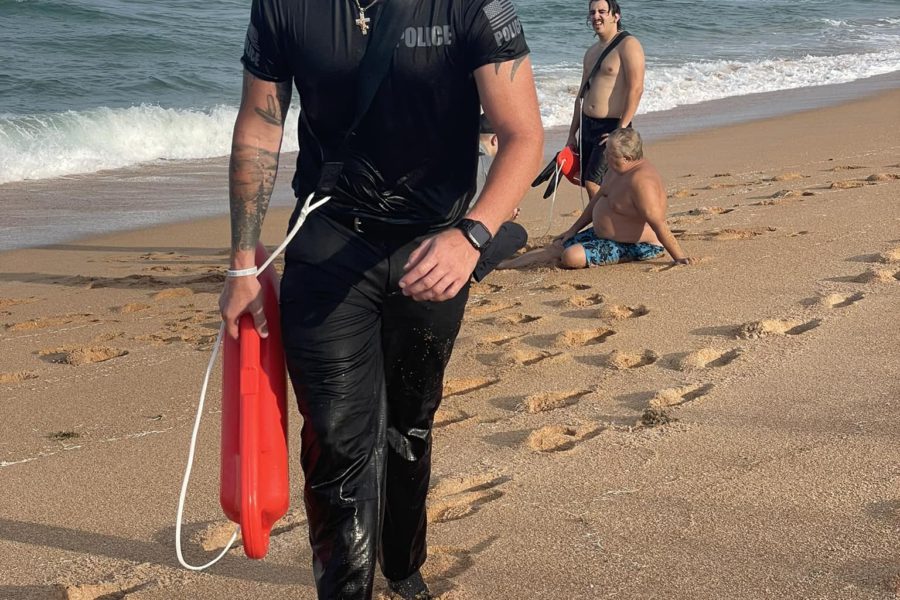

The Flagler County Board of County Commissioners held its regular meeting on Monday, May 4, 2026, at 9 a.m. Chair Leann Pennington presided alongside Commissioners Andy Dance, Greg Hansen, Kim Carney, and Pam Richardson, with Interim County Administrator Adam Mingle and County Attorney Michael Rodriguez also present. The meeting covered six proclamations, a pulled consent item involving a budget agreement with the Sheriff’s Office, a wide-ranging legislative update from the county attorney, and commissioner reports.
Proclamations
Problem Solving Court Month
Commissioner Carney read a proclamation designating May 2026 as Problem Solving Court Month in Flagler County, recognizing the county’s Drug Court program, which has operated since 2006 and seen 206 individuals complete its requirements. Of those graduates, 71% have not been charged with any new felony offenses, and 86% have not faced new drug charges. Circuit Judge Dawn Nichols, who serves as the drug court judge, accepted the recognition and praised the program. “I think Flagler has, if not the best drug court program in the state, one of the top notch,” Nichols said. The board voted unanimously to approve the proclamation.
National Correctional Officers and Employees Week
Commissioner Richardson read a proclamation recognizing May 6–12, 2026, as National Correctional Officers and Employees Week in Flagler County, honoring detention deputies and staff at the Flagler County Inmate Detention Facility who handle more than 3,000 individual cases per year. Sheriff Rick Staly accepted the proclamation with Chief Dan Engert and their team — including Lucy, the facility’s therapy dog. Staly noted the department has seen more than a 50% reduction in crime since 2017, crediting the detention facility’s programs for rehabilitation and education as a major factor. “They are the invisible team that most people don’t see, which is a good thing, but they really do an important, critical job,” Staly said. Chief Engert added that the sheriff’s leadership has pushed the team to be creative and innovative in ways he had never seen in his career. The board voted unanimously to approve the proclamation.
Public Service Recognition Week
Commissioner Hansen read a proclamation designating May 3–9, 2026, as Public Service Recognition Week in the Office of the Flagler County Clerk of the Circuit Court and Comptroller, honoring employees who manage court operations, public records, finance, treasury, guardianship oversight, and marriage services. Clerk Tom Bexley accepted on behalf of his office and of all public servants across Flagler County. “This is so much bigger than us,” Bexley said. “It’s about all of my fellow constitutional officers, all of your board employees, the school board, the federal employees.” Bexley also promoted the clerk’s office free property fraud alert notification service, which alerts property owners when any document is recorded in their name. He encouraged all residents to sign up by visiting the clerk’s website. The board voted unanimously to approve the proclamation.
Water Safety Month
Commissioner Dance read a proclamation designating May 2026 as Water Safety Month in Flagler County, noting that drowning is the leading cause of unintentional death among children ages one through four in Florida, with most incidents occurring in bathtubs or home swimming pools. Brielle Goldberg, director of the local nonprofit Water Safe Inc. and a swim instructor, accepted the recognition and shared that Florida recorded over 105 fatal pediatric drownings in 2024 — a number that rose to nearly 120 in 2025. As of the meeting date, Florida had already reached 30 pediatric drownings in 2026. “Drowning is a preventable tragedy, yet it leads the nation as the top unintentional cause of death for young children,” Goldberg said. She urged residents to enroll children in formal swim lessons, install pool barriers, maintain constant supervision near water, and learn CPR. The board voted unanimously to approve the proclamation.
Older Americans Month
Commissioner Carney read a proclamation designating May 2026 as Older Americans Month in Flagler County. Health and Human Services Director Joe Hegedus accepted the recognition alongside senior services case managers and center staff. Commissioners noted that 41% of Flagler County’s population is 65 or older — one of the highest percentages of any county in Florida. Commissioner Dance used the moment to publicly call for funding the county’s senior daycare center, saying, “I think we’ve got to get that done.” Hegedus responded that his team is still searching for funding. The board voted unanimously to approve the proclamation.
National Travel and Tourism Week
Commissioner Dance read a proclamation designating May 3–9, 2026, as National Travel and Tourism Week in Flagler County. The proclamation noted that tourism supports nearly 12% of total jobs in Flagler County and generates over $530 million in economic impact annually through accommodations, restaurants, and attractions. Tourism Director Amy Lukasik accepted the recognition with her staff and said the office planned to spend the week visiting local businesses to thank them for serving visitors. The board voted unanimously to approve the proclamation.
Records and Information Management Month
Commissioner Hansen read a proclamation designating April 2026 as Records and Information Management Month, recognizing the Clerk’s Office for its role in protecting public records and preventing property fraud. Clerk Bexley again accepted and promoted the free recording notification service. The board voted unanimously to approve the proclamation.
Consent Agenda — Approved With One Item Pulled
The board approved the full consent agenda with the exception of Item 7E, which was pulled for separate discussion. The vote on the remainder of the consent agenda was unanimous.
One item briefly discussed before the vote was Item 7D, the Baker Act Transportation Plan update. Health and Human Services Director Hegedus clarified that the changes in the plan are minor administrative edits to reflect a name change for SMA, the county’s behavioral health partner. He noted that a more significant revision is coming once SMA completes construction on a new on-site Baker Act intake facility, which will allow Flagler County residents to be evaluated locally rather than being transported to Halifax Medical Center in Daytona Beach. Commissioners expressed strong support for that goal, noting the distance and logistics are a burden for patients and families.
Item 7E: Sheriff’s Unexpended Budget Reserve Agreement — Tabled
The most extended discussion of the meeting centered on Item 7E, a proposed interlocal agreement that would allow unexpended funds from the Flagler County Sheriff’s Office’s annual budget to roll into a designated reserve — to be used in future years for priorities such as a public safety training center.
Sheriff Staly presented the intent behind the proposal: the Sheriff’s Office anticipates having surplus funds at the end of the current fiscal year due to successful grant awards covering costs that had been budgeted from county funds. Rather than those savings returning to the county’s general fund, the agreement would set them aside in a reserve that the Board would ultimately still control and vote on before any spending occurs.
“It’s not my money. It is your money. It’s the taxpayer’s money. And you approve it,” Staly said. He added that he sees the training center as a shared facility that would benefit both the Sheriff’s Office and the county’s fire department, and that a private landowner in Palm Coast has expressed interest in hosting it in an industrial area if the current site at Justice Lane does not move forward.
Commissioner Dance expressed support for the concept but raised concerns about specific language in the agreement. He said the county’s own staff report stated that “approving the agreement abdicates the board’s statutory power to budget county funds,” and he wanted legal clarification before proceeding. He also noted the existing agreement between Flagler County and the Florida State Guard for use of the Justice Lane site, and questioned what changes to that agreement would be necessary if the sheriff pursued an independent project on the same property.
Commissioner Hansen echoed those concerns, saying he read the agreement the same way — that the board would have no say on how the reserve funds are spent — and also pointed out that no construction permits have yet been pulled for the training center, regardless of available funding.
Sheriff Staly acknowledged significant frustration with the Florida Department of Management Services, which manages the state’s training center project. He said the project is three years behind schedule, with permits originally expected in late 2025 now pushed to July 2026 at the earliest. DMS has estimated the project at $25 million, with a building component of $5 million — a figure Staly called far above what comparable construction should cost. “They’re claiming a 6,000 square foot building will be $5 million. That’s bullshit,” the sheriff said publicly. “It’s a waste of taxpayer money at the state level.”
The sheriff’s general counsel, John the Master, cited language in Section 2B of the agreement stating that nothing in the document restricts the Board’s legislative discretion to set or adjust the sheriff’s annual budget, arguing the board retains oversight. County Attorney Rodriguez acknowledged having reviewed the matter only that morning and agreed that a workshop setting would be more appropriate for the discussion.
After public comment on the item drew no speakers, the board voted unanimously to table Item 7E to the May 18 workshop and regular meeting, where a more complete discussion can take place. The sheriff’s chief of staff will represent the office at that meeting in place of the sheriff, who will be out of town.
County Attorney’s Legislative Update
County Attorney Michael Rodriguez delivered an extensive update on new and pending state legislation affecting Flagler County’s operations across several areas.
Elections — HB 991 (Florida’s “SAVE Act”): This law, already signed by the Governor, adds new citizenship verification requirements for voter registration and requires supervisors of elections to routinely verify registrant citizenship status, with the possibility of purging voter rolls if verification fails. It also requires citizenship status to be noted on driver’s licenses upon renewal. The Flagler County Supervisor of Elections has already been served with a lawsuit challenging the law, which has been referred to the office’s insurance counsel.
Budget Transparency Requirements: A new law not yet signed but expected to take effect will require all county governments to conduct and publicly post a 10% budget reduction exercise each year, identifying strategies to cut spending without compromising law enforcement, fire services, or legal obligations. It also requires all county employee names, titles, and salaries to be posted quarterly on the county’s website in downloadable format, along with a public budget development calendar due by January 30 of each year.
Impact Fees — New Restrictions: The legislature has narrowed the conditions under which counties can increase impact fees, requiring use of a specific plant-based methodology and limiting the county’s ability to rely on what had been called “extraordinary circumstances.” Existing requirements — including two publicly noticed workshops and a unanimous commission vote for any increase — remain in place.
DEI Prohibition — SB 1134: This law, signed by the Governor and effective January 1, 2027, prohibits local governments from funding, promoting, or taking official action related to diversity, equity, and inclusion. Existing DEI-related ordinances, rules, and programs are voided. Rodriguez noted that the language is vague in some areas and leaves gray zones, such as whether a county representative can speak to a single-gender civic group without violating the law. Penalties include potential removal of elected officials by the governor for malfeasance, and enforcement has been opened to the general public — meaning any resident may file a lawsuit claiming a violation. Rodriguez said the county has already revised its personnel policies to comply and will work department-by-department to ensure implementation. The law does not restrict compliance with federal EEOC anti-discrimination requirements.
Land Use — HB 399 (Compatibility Standards): This law, already signed, makes it harder for counties to deny development applications on grounds of incompatibility with surrounding land uses. Counties must now document specific, fact-based findings of incompatibility and cannot simply cite community character or neighborhood feel as grounds for denial. This applies even to comprehensive plan amendments. Rodriguez said this will directly affect how Flagler County handles pending comp plan and land development regulation changes.
Land Use — Pre-Application Consulting and Plat Changes: A bill not yet signed would create a program allowing developers to have pre-application meetings with private consultants rather than local government staff. A companion change prohibits counties from imposing additional approval conditions for administrative plats beyond what state law requires and bars counties from denying building permits based on environmental conditions unless those conditions are in the county’s adopted land development regulations.
Agricultural Enclaves — SB 686: This bill amends the definition of agricultural enclaves — agricultural properties surrounded at least 75% by residential development. Such property owners can now apply for single-family residential development consistent with adjacent parcels, to be treated as a conforming use regardless of the county’s comp plan or zoning. Agricultural enclaves adjacent to interstate highways may also be developed for commercial or industrial uses. Rodriguez noted the law expires in two years. He flagged that Flagler County has agricultural land adjacent to industrial areas, which could be affected by the interstate provision. The board directed Rodriguez to clarify that point further.
Live Local Act Updates: The legislature again amended the Live Local Act. New provisions allow county-owned land to qualify for Live Local affordable housing projects if the county is a co-applicant. Farms and farm operations are now explicitly excluded from being considered commercial or industrial uses under the act. Several open space and rural zoning district types are also now excluded. And parcels larger than three acres owned by a religious institution with a public house of worship for at least 10 years — regardless of zoning — can now qualify for residential development under the act. Rodriguez noted this provision has been nicknamed “YIGBY” — “Yes In God’s Backyard” — and some churches are already exploring affordable housing applications under the new language.
Agritourism — Rural Event Venues: The legislature has moved to prevent local governments from requiring permits or licenses for rural event venues — such as wedding barns — located on agricultural land, as part of its expansion of agritourism protections. Rodriguez said this creates a potential conflict with an existing definition in the agritourism statute that still classifies publicly accommodating facilities as non-agritourism, and that courts may need to resolve the language. He noted counties still retain the authority to regulate off-site impacts such as traffic and drainage from such venues.
SB 180 Litigation Update: Rodriguez reported that most litigation challenging SB 180, which imposed restrictions on local land use authority, is “near dead,” with only one individual plaintiff issue still alive. However, he flagged an active case from Hillsborough County arguing that the Growth Management Act (Chapter 163), which has a supremacy clause over conflicting statutes, was not amended alongside SB 180 and therefore should take precedence in areas of conflict. That case is being watched closely by local government attorneys across the state.
Commissioner Dance responded to the legislative update by noting a tension he sees in state policy: “The public hears about overspending, but at the same time the government entities and legislature are asking us to absorb all of those conditions of growth. We can’t control growth the way we see it fit for our communities, but then as those things cost money to maintain, we get publicly chastised for spending money for that quality of life.”
Commissioner Reports
Commissioner Dance also raised a public concern about emails sent to all commissioners accusing the county of mismanaging Flagler Executive Airport by allowing planes to fly during a tornado watch. Airport Director Roy Seager addressed the concern directly, explaining that tornado watches and warnings are different — watches indicate favorable conditions that may exist, not that a tornado is occurring — and that the FAA does not automatically close airports during watches. Seager also clarified that when the airport goes below instrument flight minimums, local air traffic controllers hand off control to Daytona Beach’s radar facility, not local staff. “If somebody wants to fly their airplane during a tornado watch, that’s on them,” Seager said. “We don’t control or help pilots fly their airplane.”
Commissioner Hansen announced that dredging at Bing’s Landing is scheduled to begin May 18, pending approval from the Army Corps of Engineers on where to deposit the dredged material.
Commissioner Richardson praised the new Bunnell mural on the SMA building along State Road 100, calling it “the most magnificent, most impactful thing that’s happened in our county in a long time.” Chair Pennington added a personal story: “It’s been reported that a woman brought her three-year-old child, who was autistic and didn’t speak. Saw that mural. And the child said his first words ever, and it was, ‘Wow.’”
Commissioner Dance requested a follow-up on playground safety issues at Wadsworth Park and sought guidance for a resident on a private road maintenance question in his district.
Interim Administrator Mingle confirmed that the May 18 workshop will also include a discussion of all things related to Flagler Estates and northwest county issues, and will add a comprehensive beach management update — including the status of Reach 2 erosion funding, an update from the county’s new coastal engineer, and draft interlocal agreements with Flagler Beach and Beverly Beach on maintenance and funding responsibilities.
Public Comment
One resident, Raymond Royer, spoke during public comment. He suggested the county look into joining a class action lawsuit involving fire apparatus manufacturers, alleging that equipment costs have risen dramatically due to market monopolization. He also commented on the sheriff’s desire for a helicopter, saying he believes a drone program — which the sheriff has been developing — is a better use of resources given the cost of helicopter maintenance, which he estimated at $1 million to $2.5 million annually based on conversations with Miami-area officials.
No other members of the public addressed the board during the community outreach period at either the beginning or end of the meeting.
The board adjourned the regular meeting to attend the previously scheduled workshop on the county administrator search and merit pay plan.
More information about Flagler County government and upcoming meetings is available at www.FlaglerCounty.gov. The free property fraud alert notification service from the Flagler County Clerk’s Office can be accessed at www.flaglerclerk.com. The Sheriff’s Office Fallen Hero Memorial is scheduled for May 14 at 7:45 p.m. at the Sheriff’s Office Operations Center.
The post Flagler County Commissioners Honor Public Servants, Table Sheriff’s Budget Deal, and Receive Sweeping Legislative Warning first appeared on Flagler County Buzz.