
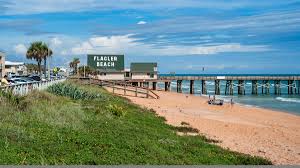
FLAGLER BEACH — As traffic builds and parking pressures intensify, Flagler Beach leaders say the real challenge facing the city is not just congestion—it is how the region chooses to respond to it.
During a recent strategic planning session, Commissioner Eric Cooley framed the issue in terms that resonated across the discussion.
“I don’t like the us and them mentality,” Cooley said during the session. “But if we just accommodate the current population, plus tourism, plus additional population that’s coming, then you have effectively destroyed the quality of life… for our residents.”
That statement has become a defining theme for the city’s current moment: how to remain a welcoming destination without allowing regional demand to overwhelm local capacity.
Flagler Beach has not approached this challenge without preparation. Its outlines a long-term framework focused on infrastructure investment, stormwater management, and preserving the city’s small-town coastal identity.
But recent discussions suggest that planning alone is no longer enough.
“It’s not the people. It’s the cars,” said Scott Spradley during the same strategic planning session, identifying vehicle congestion—not visitation itself—as the primary strain on the city’s roads and infrastructure.
Commissioners agreed that parking and traffic management must now become central priorities.
“It’s time for parking to come to the forefront. We’ve got to figure out a way to do it,” Spradley said during the session. “It’s not just a matter of paid parking being the only solution. It’s a piece of the puzzle.”
At the heart of the issue is a structural imbalance. Flagler Beach serves as a destination for residents across Flagler County, particularly from Palm Coast, as well as tourists. Yet the responsibility for maintaining the roads, parking, and public infrastructure that support that use falls primarily on the city.
City leaders say that reality requires a shift in thinking—from isolated local solutions to coordinated regional planning.
Mayor Patti King pointed to one example of what that cooperation could look like during the session.
“And could we run county-city co-sponsored shuttles?” King said. “That’s like the best of all worlds… and keeps the cars off.”
At the same time, she acknowledged ongoing friction with Flagler County.
“The county hasn’t been playing real nice with us lately,” King said during the session, referencing disputes over beach management and shared responsibilities.
City Manager Dale Martin has indicated through planning discussions that the city is prepared to act, with strategies and tools already in place to manage parking, improve infrastructure, and guide growth.
Still, the broader message from the commission is that Flagler Beach cannot solve these challenges alone.
Cooley’s remarks underscored that point—not as criticism, but as a warning about the consequences of inaction.
Avoiding an “us versus them” divide, he suggested during the session, will require more than discussion. It will require Flagler Beach, Flagler County, and Palm Coast to align on how growth is managed, how infrastructure is funded, and how the region’s most valuable asset—the beach—is protected.
The city has outlined its vision. Whether that vision succeeds may depend on whether the region chooses cooperation over conflict.



Leave a Comment